Posture correctors 2026: the 9 options sold in the UK compared, from £4.99 to £163. Braces hold you. A trainer works the muscles. The £69.99 trainer came first.
We compared the posture correctors you can actually buy in the UK: the £5 straps, the high-street braces, the best-made brace on Amazon, posture shirts, the Upright GO, EMS back devices and the £15 “EMS” gadgets. Almost all of them do the same thing: they hold your shoulders back, or buzz to remind you, for as long as you wear them. Take them off and nothing has changed. Only one type asks the muscles between your shoulder blades to do the work, and the EMS trainer that does it in 20 minutes, sitting down costs £5 less than the best-known smart reminder.
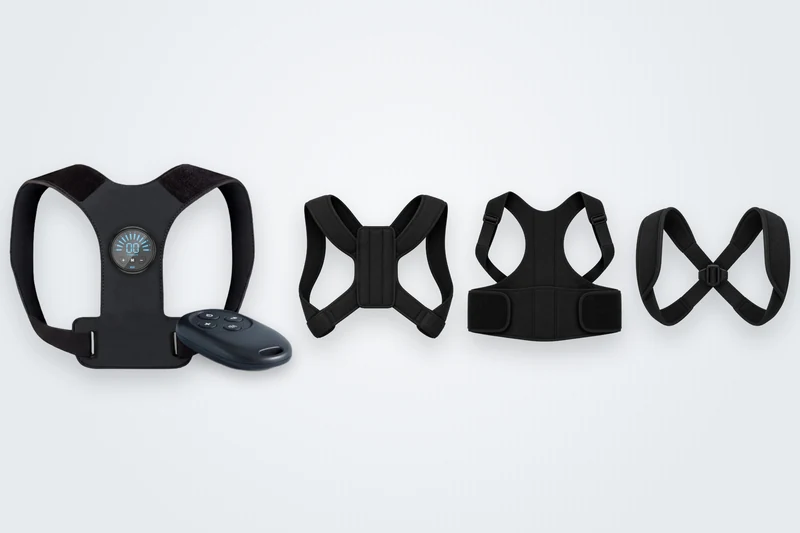
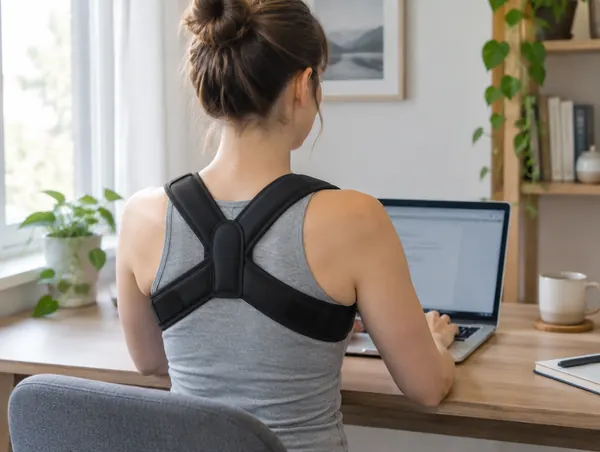
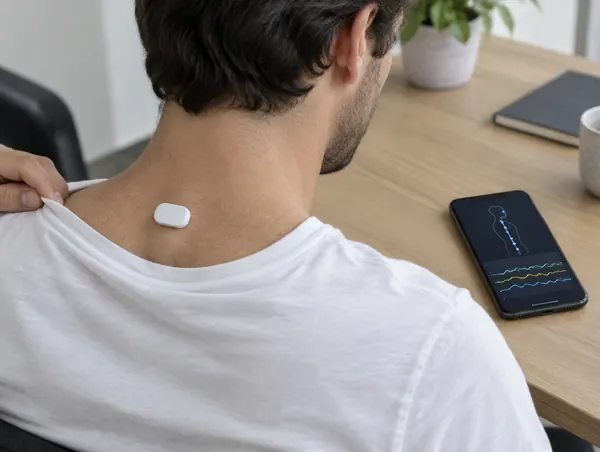
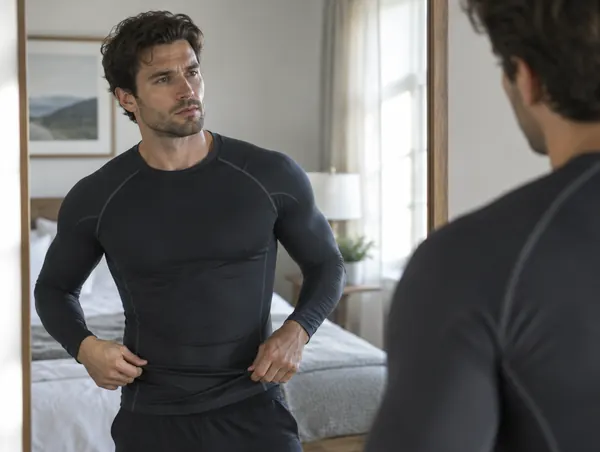
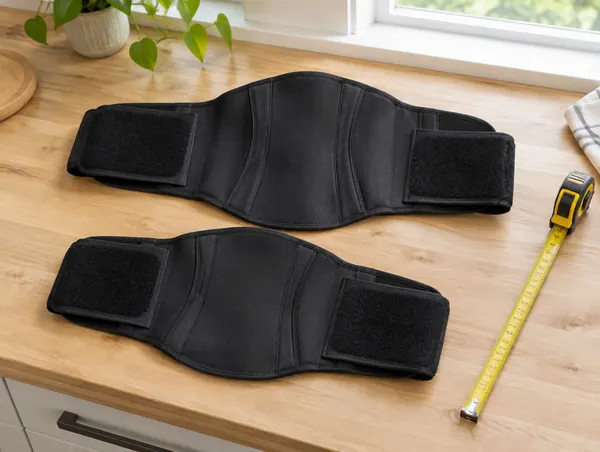
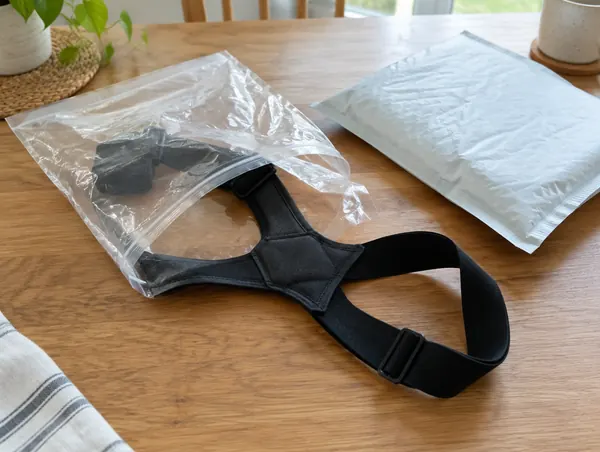
Four products at the same scale, shown without branding. Three hold you in place. One makes the muscles between your shoulder blades work.
By Eleanor Whitfield, posture and desk-health editor Updated 22 October 2026 · 14 min read
How we make money: CompareThem is free to read. Some links on this site go to sellers we have a commercial relationship with, and we may earn money when you buy through them. That never changes the facts, prices or specifications we publish. Every competitor price is the one shown by the seller when we checked, and every source is listed at the bottom of the page, so you can check the comparison yourself. Full transparency.
The short version
Most posture correctors are braces. A brace pulls your shoulders back while it is on. It does not ask the muscles that hold your shoulders back to do anything, so when it comes off at the end of the day, you settle back into the same shape. The smart ones, like the Upright GO 2, buzz when you slouch. That is a reminder, not a workout.
Most people searching for a posture corrector have the same, very ordinary problem: a desk job, an office chair, a laptop, and shoulders that have rolled forward by mid-afternoon. For that problem, a stronger strap does not help much. Working the muscles between the shoulder blades does.
Our ranking, from best to worst:
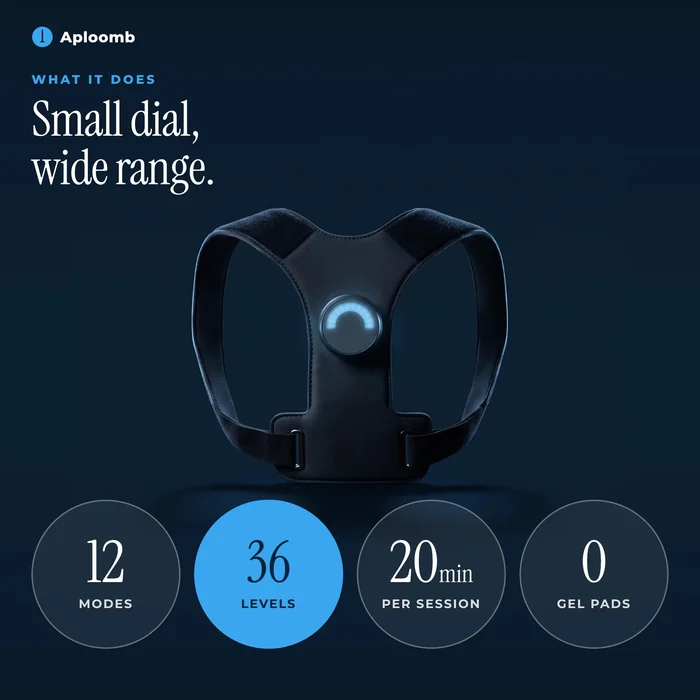
Aploomb PostureFit EMS — A+ · £69.99, or 2 for £122.49. The only option here that makes the upper-back muscles contract. 20 minutes a day, sitting down, 12 modes, 36 levels, no gel pads to rebuy.
ORTONYX posture corrector — B+ · around £47.60. The best-made brace we found. Still a brace. Still a brace.
Upright GO 2 — B · around £75. A clever buzz-when-you-slouch reminder,.
Posture shirts (Active Posture) — B · £69.95 to £89.95. Comfortable all day under a shirt; they guide, they do not train.
Branded braces (Neo G, Orthotix) — B− · £35.99 to £46.95. Well made, easy to buy. Same limit as every brace.
EMS back devices — C+ · £65 to £163. Real EMS, but mostly built for the lower back or massage, and some poorly rated.
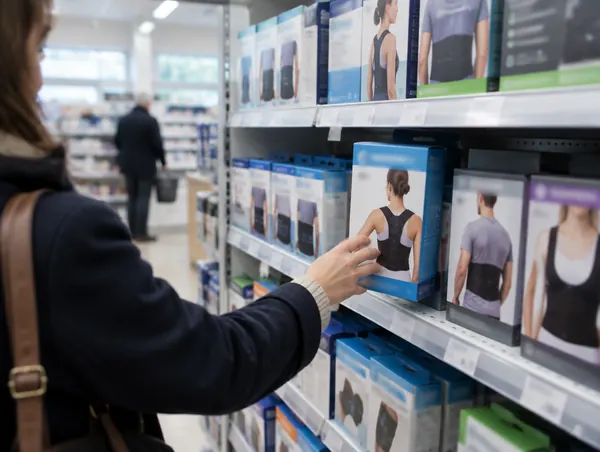
High-street braces (Boots, Superdrug) — C · £14.99 to £19.99. Fine as a reminder for an hour.
Very cheap straps — C− · £4.99 to £9.99. Thin elastic that tends to dig in under the arms.
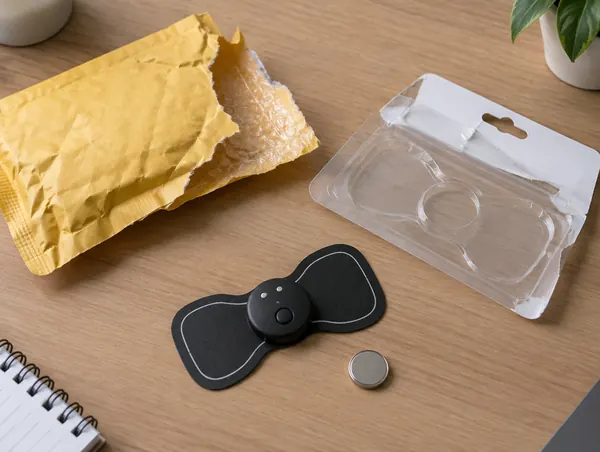
£15 “EMS” posture gadgets — D · around £14.95, shown against a “was £29.90”. Little published detail.
It does one specific thing: gentle pulses make the muscles between your shoulder blades contract, like a row or a band pull-apart, while you sit. It trains muscle over weeks; it does not change the shape of your spine. Judge it after four to six weeks, not on day three. See how it works »
Can I wear it at my desk, under my clothes?
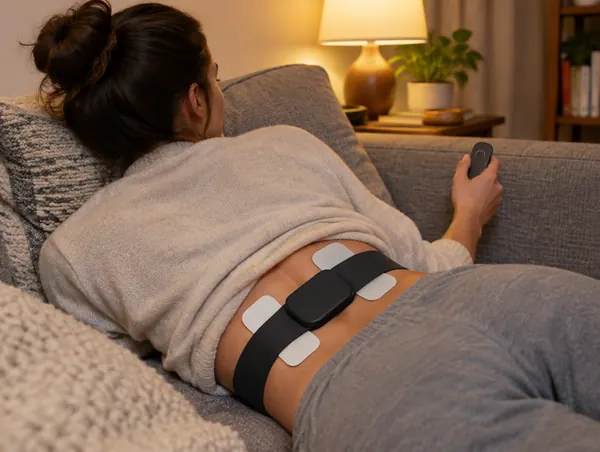
Yes, for the session. The pads need bare skin, so it goes on against the skin and your top goes back over it. Twenty minutes, then it comes off: nothing to wear all day. See it worn »
Will it hurt?
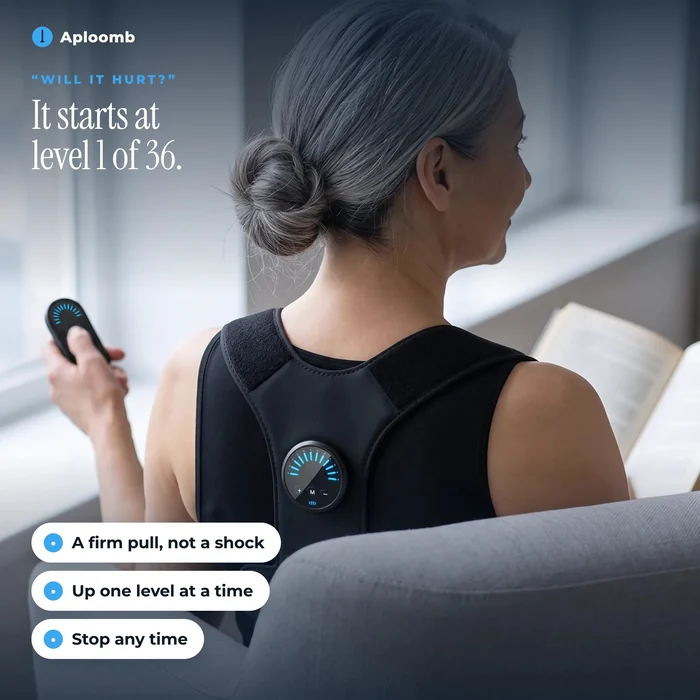
It should not. You start at level 1 of 36 and feel a firm, rhythmic twitch, not a shock. It is not for everyone: not with a pacemaker or implanted device, in pregnancy, with epilepsy or a heart condition, or over broken skin — check with your GP first. See the 36 levels »
9options compared
120UK listings checked
£4.99–£163price range
20 mina day for our No. 1
The problem: a posture corrector that only works while you wear it
Try this before reading on. Search “posture corrector” and look at what comes up. Straps. Braces. Straps with padding. Braces with a buzzer. Most of them describe the same mechanism in different words: they pull your shoulders back. What almost none of them say is what happens when you take it off.
The people who have tried them say it the same way. “I was told that they actually make matters worse as your muscles get even lazier and weaker through being supported by the corrector.”“posture correcters just do the work for your muscles so they get even weaker over time.”“The stiff ones just made my muscles switch off.”
And most people searching have the same, very ordinary problem. Eight hours with your arms forward and your head over a keyboard. Then the drive home, then the sofa. You catch yourself hunched, sit up straight, and ten minutes later you have folded forward again. You stop noticing it day to day. You notice it in photos taken from the side.
“I have postural issues that are worsened by hunching over a computer”. “I feel like it keeps getting worse from constantly looking down at my phone and sitting at my desk all day.” And the line that sums up all the others: “I'm fed up with my neck and shoulders aching because of my constant slouching!”
This is not a lack of willpower. The muscles that hold your shoulders back, the rhomboids and the middle of the trapezius between your shoulder blades, spend the whole working day stretched and idle. A brace takes over their job, so they still have nothing to do. That is why a brace feels good while it is on and changes little once it is off. A trainer gives them the job back. So the only question that matters is this: between £4.99 and £163, which of these options asks your own muscles to do the work, and which just holds you in place? We went through 120 UK listings to find out.
The number to know before you buy
The typical posture corrector on Google Shopping in the UK costs around £15. The best-made brace we found, ORTONYX, is £47.60. The Upright GO 2 is £75. EMS back devices run from £65 to £163. And the route many people end up taking, a private physio or chiropractor, typically costs £50 to £100 for the first appointment alone, before any follow-ups.
So price tells you very little. A £5 strap and a £47 brace do the same job, holding you. A £75 sensor reminds you. The question is not how much you spend, it is whether anything you buy makes the muscles work.
What to look for, and what to avoid
Look for: something that works the muscles between your shoulder blades, not just the straps over your shoulders; a session that fits a desk day; nothing to keep rebuying (gel pads, adhesive strips); a clear safety section; a real return window and a UK address for returns.
Avoid: any posture product that promises to “fix” or “reverse” a hunched back. “Was” prices you cannot find it ever selling at. Thin elastic straps that cross under the armpits. “EMS” gadgets with no modes, no levels and no safety guidance. And any brace sold as something you should wear all day, every day.
The 9 options, one table
Each price is the one published by the maker or seller, or shown on Google Shopping UK, when we checked on 22 October 2026. Prices change: check again before you buy.
The price on the label tells you almost nothing about what the product does. A £5 strap and a £47.60 brace share one mechanism: they hold you. A £75 sensor shares another: it reminds you. Only one row in this table asks your own muscles to do the work, and it costs less than the reminder. On that measure, the most expensive options are not the most effective. They are the ones selling a brand, an app or a garment.
That is why the ranking starts where it does. The £69.99 trainer is the only option in this comparison that targets the muscles between the shoulder blades, in a 20-minute seated session, with 36 levels and no gel pads to rebuy.
The 9 options, from best to worst
No. 1 — Best way to work the posture muscles 2026 · Grade A+
£69.99 per trainer, 2 for £122.49, 3 for £174.99 · 12 modes · 36 levels · wireless remote · one size · 30 days to return unused
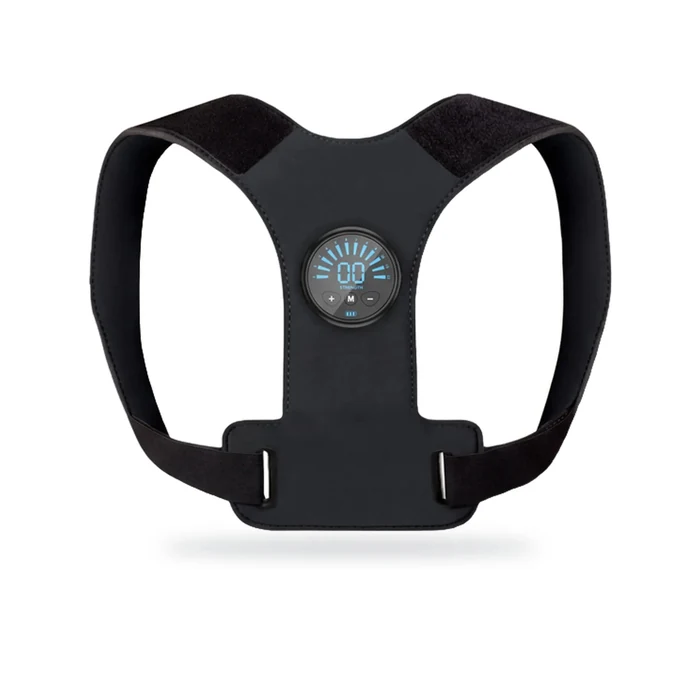
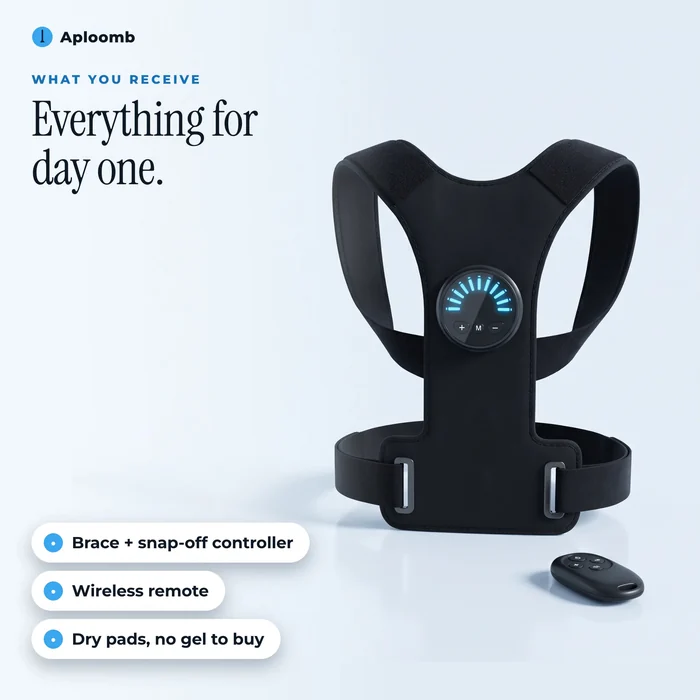
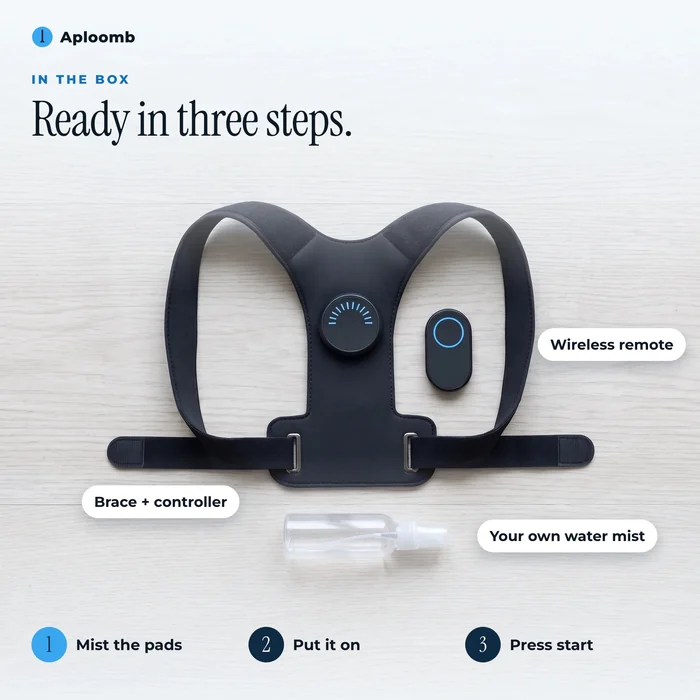
A brace with two dry fabric pads either side of the spine, a snap-off controller and a wireless remote. You mist the pads, put it on, sit down for 20 minutes.
Brace, controller, remote12 modes, 36 levelsIn the box, 3 steps
9.3OVERALL
Muscle work9.6
Fits a desk day9.4
Comfort8.8
Cost over a year9.0
Service8.4
What it does well
The only option here that makes the muscles between your shoulder blades contract, instead of strapping your shoulders back
Two pads either side of the spine, over the rhomboids and mid-traps. Never on the spine, never on the neck
One 20-minute session a day, sitting down. Read, answer email, watch something
12 modes and 36 levels, starting at level 1, so you can step up over the weeks
A wireless remote: change mode or level from the front, no reaching behind your back
Dry fabric pads switched on by a mist of water. No sticky gel pads to peel and rebuy
The controller snaps off and the brace can be washed
One size, adjustable strap: nothing to measure
Free tracked UK delivery, 14 days to cancel by law, 30 days to return it unused, faults collected on a prepaid label
What it does not do
It needs charging
On a change of mind, return postage is yours
Our verdict: it came first on the criteria that decide whether a posture product changes anything: does it make the muscles work, and does it fit a desk day. We would rather you checked that than took our word for it. So try this. Forget this page and look for another posture product sold in the UK, under £70, that works the muscles between the shoulder blades in a 20-minute seated session, with 36 levels, a wireless remote, no gel pads to rebuy and 30 days to send it back unused. We went through 120 UK listings and did not find one. That is the whole argument.
£69.99 per trainer · remote included · free tracked UK delivery
A £69.99 trainer ranked above the best-made brace and the best-known smart posture device is exactly the kind of claim to check rather than believe. So this section is written to be checked. Every number is a price, a setting or a condition published by a seller. Nothing asks you to take our word on how it feels.
What it is. The PostureFit EMS is an electrical muscle stimulation (EMS) trainer for the upper back, worn like a brace. Two dry conductive fabric pads sit either side of the spine, over the rhomboids and mid-traps. Gentle pulses make those muscles contract and release: the squeeze you would get from a row or a band pull-apart, without doing the movement. A round controller with a display snaps onto the back panel, and a wireless remote lets you change the mode or level from the front. That is the type of product. The rest is whether it is worth the price.
The price. £69.99 buys one trainer with its remote and charging cable. Two cost £122.49, three £174.99. The nearest thing in price is the Upright GO 2 at around £75, which reminds you to sit up but does not work the muscles. Posture shirts cost £69.95 to £89.95. EMS back devices on Google Shopping run from £65 to £163, mostly for the lower back.
The gel pads. This is the point we would ask you to look at, even if you buy something else. Many EMS devices run on sticky gel pads that lose their grip and have to be replaced, so the price on the box is not the price of using it. PostureFit's pads are dry fabric: one light mist of water before each session, nothing to peel, nothing to rebuy.
“If you keep it on too long, your body may begin to rely on the device so much that you revert back to that rounding.”— Christina Rodriguez, PT, DPT, writing about posture correctors for Hospital for Special Surgery (HSS), New York, 2021. She does not comment on any product on this page.
Here is what the first weeks look like, based on the maker's own guidance:
What to expect, week by week
First session
Charge it, mist the two pads, fasten the strap across your mid-back against the skin, start at level 1 or 2. You feel a firm, rhythmic pull between the shoulder blades: a twitch, not a shock. If you feel nothing, the pads are dry: mist them again.
Week 1
You find your level. Most people step up a few levels as the sensation becomes familiar. It should feel firm, never painful. One session a day is the recommendation: muscle needs time to recover between sessions.
Weeks 2–3
It becomes routine. The session moves into the slot where it fits: the inbox at your desk, the news, a book, a game.
Weeks 4–6
The real decision. Muscle adapts over weeks, not days, so this is the earliest fair moment to ask whether sitting up feels easier. If it is not for you, unused trainers in their original packaging can go back within 30 days, on top of your 14-day legal right to cancel.
Every session starts at level 1 of 36. Image: Aploomb.
The fit. EMS only works where the pad touches the skin. A dry pad, or a strap left loose, gives you a weak or prickly feeling instead of a clean contraction. Mist the pads, fasten the strap snugly across the mid-back, and start low.
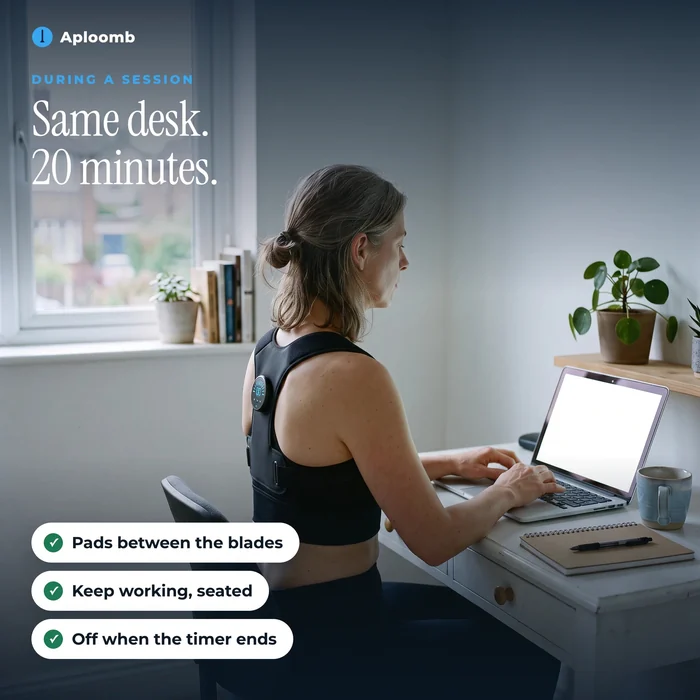
Can people see it? After price, this is the question that comes up most. The pads need bare skin, so it goes on under your top, and your top goes back over it. It is worn for 20 minutes, not all day: nothing to hide under a work shirt from nine to five, and nothing digging into your armpits by lunchtime.
Same desk, 20 minutes. Image: Aploomb.
The complaint we read most often is about straps, not trainers: “all they seem to do is pinch the nerves/arteries under my arm pits and make my lightheaded.” A 20-minute session avoids wearing anything under the arms all day.
Who should not buy it
Pacemaker or implanted device, pregnancy, epilepsy, a heart condition or broken skin where the pads sit: check with your GP first. Back or neck pain, numbness or tingling: see your GP or a physio before buying anything.
What buyers complain about with other options, and what our No. 1 does instead
R
A posture-strap buyer, Reddit (r/bigboobproblems)Feb 2026 ✓ Quote checked
“Same here, they didn’t do much for my posture and were just crazy uncomfortable overall tbh.”
Our No. 1:Worn for 20 minutes, sitting down, not strapped on from nine to five.
T
An Upright GO buyer, TrustpilotJune 2026 ✓ Quote checked
“You need to keep the app running constantly on your phone and calibrate it every time you put it on.”
Our No. 1:No app, no account, no pairing. A wireless remote and a start button.
T
An Upright GO buyer in the UK, TrustpilotFeb 2026 ✓ Quote checked
“The attempt to get you to buy overpriced sticky patches is also very silly.”
Our No. 1:Dry fabric pads and a mist of water. Nothing sticky to rebuy.
R
A posture-corrector user, Reddit (r/bodyweightfitness)May 2026 ✓ Quote checked
“posture correctors helped me more as a reminder than a real fix”
Our No. 1:Makes the muscles between the shoulder blades contract, instead of holding you or buzzing at you.
T
An EMS massager buyer, TrustpilotFeb 2026 ✓ Quote checked
“I purchased the 4 in 1 massager and it seemed great at first. But after a month or so it started shocking me when I used the EMS.”
Our No. 1:Starts at level 1 of 36, with full safety guidance, and a faulty unit goes back on a prepaid label.
No. 2 — The best-made brace, still a brace · Grade B+
2
ORTONYX posture corrector
Around £47.60
6.9OVERALL
Muscle work2.8
Fits a desk day6.6
Comfort8.5
Cost over a year8.5
Service8.0
What it does well
Padded straps: more comfortable than the thin elastic ones
Works the second you put it on, nothing to charge
Easy to buy and return through Amazon UK
What it does not do
It holds your shoulders back. It does not ask the muscles to do anything
When it comes off, so does the effect
To feel any difference, you wear it for hours, at the desk, under your clothes
Padded straps get warm under a shirt on a long day
One setting only: how tight you pull the strap
Our verdict: if every brace on the market were as well made as this one, we would have no quarrel with braces. It is the best version of the type. But it is still the type: it does the work for your muscles, so your muscles still have no work to do. Buy it if you want a comfortable reminder to wear for an hour or two at the desk. If you want the muscles between your shoulder blades to do the job themselves, our No. 1 is built for that.
Around £75 · sensor stuck to the upper back, phone app
6.7OVERALL
Muscle work5.6
Fits a desk day8.1
Comfort6.1
Cost over a year7.1
Service6.6
What it does well
A real idea: it tells you the moment you slouch, so you sit up yourself
Small and invisible under a shirt
An app that tracks your sitting over the day
What it does not do
The buzz reminds you; it does not work the muscles for you. On a busy day, reminders get ignored
Stuck on with adhesive, run through an app, needs charging
Around £75: £5 more than our No. 1
It buzzes in meetings and on calls
Our verdict: of all the products here, this one is closest to our No. 1 in spirit: it tries to change what you do, not just hold you. But a reminder only works while you keep obeying it, and many buyers stop. If you like data and apps, and a buzz every time you slump does not annoy you, it is a fair choice. If you would rather the muscles did a set amount of work each day, whatever kind of day it is, our No. 1 costs a little less.
No. 4 — Comfortable all day, under a shirt · Grade B
4
Posture shirts (Active Posture and similar)
£69.95 to £89.95 (Active Posture) · similar shirts up to about £106
6.5OVERALL
Muscle work3.6
Fits a desk day8.1
Comfort7.7
Cost over a year5.4
Service7.7
What they do well
The most discreet option: it is just a top under your shirt
Nothing to strap, charge or stick on
What they do not do
The panels guide your shoulders; your muscles are still not asked to work
£69.95 to £89.95 each: you need more than one to wear it daily
Sized garments: you have to get the size right
It has to be worn all day to do anything
Wrong size, no effect: fit matters more than with a brace
Needs washing after every wear
Our verdict: here is how it goes. You buy one shirt. You like it, so you want to wear it every day, so you buy a second for the wash. Nobody misled you. In one basket, you have gone from £70 to £140 or more, for a garment that guides your posture while it is on. A good product for all-day comfort. For working the muscles, it does the same as a brace.
Neo G around £35.99 · Orthotix around £38.95 to £46.95
6.2OVERALL
Muscle work2.7
Fits a desk day5.8
Comfort6.7
Cost over a year8.1
Service7.6
What they do well
Recognised brands, sold through big UK retailers
Sturdier and better finished than the cheap straps
Nothing to charge, nothing to stick on
What they do not do
A brace is a brace: the effect stops when it comes off
Around £36 to £47 for the same mechanism as a £15 strap
Straps can dig in under the arms by the afternoon
One level of support: the strap tension
Our verdict: the sensible choice if you want a brace from a name you know and a shop you can return it to. It sits behind ORTONYX on comfort, and behind our No. 1 on what it asks of your muscles: for a desk day, you pay up to £47 for a well-made reminder.
No. 6 — Real EMS, mostly for the wrong part of the back · Grade C+
6
EMS back devices (Spinegear, Antelope, Medivon, Swedish Posture, Bodify and others)
£64.99 to £162.80 on Google Shopping UK
5.6OVERALL
Muscle work6.6
Fits a desk day6.6
Comfort6.6
Cost over a year3.8
Service4.3
What they do well
Real EMS: the muscle under the pads is made to contract
Several to choose from, at different prices
What they do not do
Mostly placed on the lower back or sold for massage, not over the muscles between the shoulder blades
£65 to £163, and some run on sticky gel pads that need replacing: check before you buy
Mostly built for the lower back, not between the shoulder blades
Many use sticky gel pads that need replacing
Up to £163 for the better-known models
Our verdict: the technology is right; the target is usually wrong. If your goal is to stop your shoulders rolling forward at the desk, the muscles to work are between the shoulder blades, not at the waist. Read the listing for pad placement, and add the cost of replacement gel pads before you compare prices.
No. 7 — A reminder for an hour, on the high street · Grade C
7
High-street braces (Boots Comfortisse, Superdrug Lifemax and similar)
Lifemax around £14.99 on superdrug.com (marketplace seller)
5.0OVERALL
Muscle work2.0
Fits a desk day4.8
Comfort4.4
Cost over a year7.7
Service6.0
Our verdict: cheap, easy to find, and a decent nudge for an hour at the desk. You can pick one up with your shopping and return it to the shop. But it is the same mechanism as every brace, in a lighter build. As a reminder, fine. As a way to change anything once it comes off, no.
No. 8 — Cheap once, uncomfortable often · Grade C−
8
Very cheap straps (marketplaces, DIY and deal sites)
£4.99 to £9.99 · thin elastic figure-of-eight straps
4.4OVERALL
Muscle work1.8
Fits a desk day4.6
Comfort3.7
Cost over a year9.2
Service2.8
Our verdict: a £5 strap pulls your shoulders back about as well as a £20 one, for an hour. Then the thin elastic starts to rub under the arms, and it goes in a drawer. Keep one if you want a cheap reminder for the car or the desk. For anything more, this is the least comfortable way to stand up straight.
The elastic loses its pull after a few weeks of wear
Digs in under the arms and shows under clothes
>
No. 9 — The one we warn you about · Grade D
9
£15 “EMS” posture gadgets
Around £14.95 (Havenhome), shown against a “was £29.90” · sold through Google ads
2.6OVERALL
Published detail1.5
Price7.1
Honest pricing0.7
Safety guidance1.5
Service2.2
Our verdict: we rank it rather than ignore it, because it is what you see in the ads when you search “EMS posture corrector”: around £14.95, against a “was £29.90”. Look at the listing, not the discount. How many modes? How many levels? Where do the pads sit? What does it say about pacemakers or pregnancy? If a posture gadget cannot tell you what it does to which muscle, do not buy it. And a “was” price is only worth something if the product really sold at it.
≈ £14.95 check the “was” price and the safety section
For a lot of people, the cheapest fix has no strap and no battery. The NHS's general advice on posture and desk work comes down to a few habits: set up your chair, screen and keyboard so you are not reaching or craning, get up and move regularly instead of sitting for hours, and do simple exercises that strengthen the back and shoulders. It is free, and it would be dishonest not to say so. (That is our summary of public NHS guidance; the NHS does not endorse any product on this page.)
Two limits. The exercises work when you do them, and most people stop in week three, when the band ends up in a drawer. And desk changes help you sit better; they do not work the muscles. Start there anyway. If your shoulders still roll forward by mid-afternoon, a £69.99 trainer you can return unused within 30 days lets you add 20 minutes of muscle work a day without having to remember a routine.
The route we have not ranked: paid hands-on help
Physiotherapists, chiropractors and osteopaths are not products, so they are not in the table. But they are where many people with a stiff upper back end up, so here is what that route costs. A private physio assessment is typically £45 to £120, with follow-ups at £35 to £85; London sits at the top of the range. A first chiropractic session is usually £50 to £100, then £30 to £50 a session. NHS physiotherapy is free, but the typical wait is several weeks.
If you have pain, an injury, numbness or tingling, that is the right route: see your GP first, and book a registered professional. If you do not, and what bothers you is shoulders that roll forward by mid-afternoon, a trainer you use at home every day costs about the same as one first appointment, and it is there again tomorrow. (No product on this page replaces a clinician, and no clinician endorses one.)
How we compared
Posture is personal. It depends on your body, your chair and your day. Anyone who claims to have ranked how “straight” nine products made someone stand is selling you something. We have not done that, and we did not wear-test these products. The grades measure five things you can check from what each seller publishes. They decide whether a posture product is still in use in three months, or in a drawer.
Each option compared on the same published facts: the seller's own description, price and conditions, and the ratings shown on Google Shopping UK, checked on 22 October 2026 across 120 UK listings.
The five criteria, and why
Muscle work. Does it make the muscles between the shoulder blades work, remind you to use them, or just hold you? Holding scores lowest.
Fits a desk day. How much wearing it asks for. Twenty minutes seated beats eight hours strapped in.
Comfort. Padding, where the straps sit, whether it rubs under the arms, and what buyers say in ratings.
Cost over a year. The price, plus what you have to keep buying: gel pads, adhesive, a second shirt for the wash.
Service. Return window, who you send it back to, and what the overall rating says.
What we did not score
Apps and tracking. Some people love a graph of their slouching, and the Upright GO 2 has a good one. But for most desk workers, a graph is one more notification to dismiss. If tracking matters most to you, read No. 3.
What “posture corrector” really means
Four types of product are sold as “posture correctors” in the UK. Three of them hold or remind you. One works the muscles.
The strap brace. Elastic or padded straps over the shoulders and across the back. It pulls your shoulders back while it is on. This is 90% of what you will see, from £4.99 to £47.60.
The vibration reminder. A small sensor on the upper back that buzzes when you slouch. You do the correcting; it does the nagging. The Upright GO 2 is the best known.
The posture shirt. A fitted top with tension panels. It guides your shoulders like a soft brace, all day, as clothing.
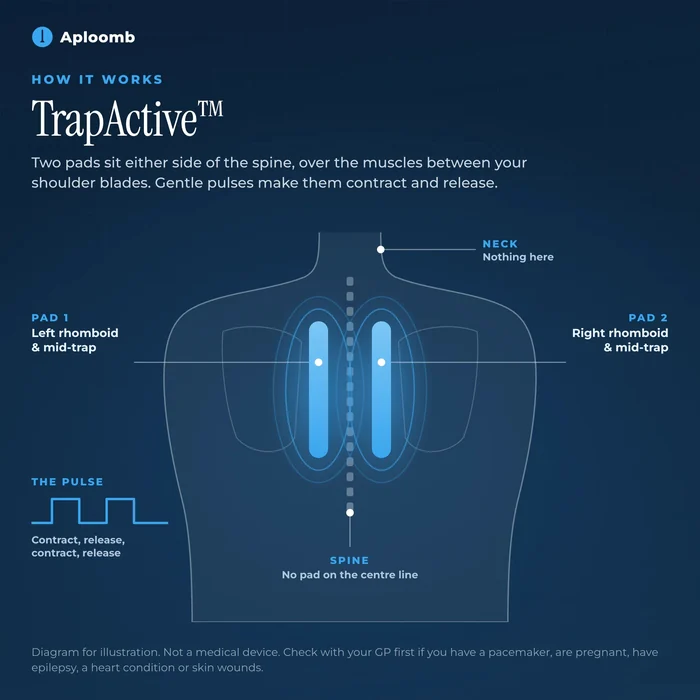
The EMS trainer. Pads on the skin send gentle pulses that make the muscle underneath contract. Placed over the muscles between the shoulder blades, it is the only type that asks those muscles to work. Our No. 1.
Where an upper-back EMS trainer sits: either side of the spine, never on it. Diagram: Aploomb.
Why an EMS trainer costs £69.99 when a strap costs £15
That is what all the prices in this article are for.
A strap is elastic and velcro. It costs a few pounds to make and sells for £5 to £20. An EMS trainer is a brace plus a stimulator, a rechargeable battery, a controller with a display, a wireless remote and conductive pads. That is why it costs more. The better question is why the other £65 to £163 products cost what they do: a brand, an app, gel pads you keep buying, or a shop on the high street.
For a desk worker, none of that is needed. A trainer, a remote and a charging cable, with dry pads that only need water, can be sold for less than the best-known smart reminder, with 30 days to return it unused. You are not buying a weaker device. You are not paying for refills.
There is a second comparison worth making. One private physiotherapy assessment in the UK typically costs £45 to £120, and a first chiropractic session £50 to £100, then £30 to £85 for each follow-up. That is the right money to spend if something hurts. If it does not, and what you want is 20 minutes of upper-back muscle work at your desk every day, a £69.99 trainer you keep costs about the same as that first appointment.
What should worry you is the other end of the market: the £15 “EMS” gadgets with a “was” price, and the £5 straps that rub. Under £20, a strap is a reminder at best. Between £45 and £75, you find the well-made braces, the reminders and the trainer. Well above that, you are mostly paying for a brand.
Five things to know before you spend anything
1. A brace is a reminder, not a workout
It holds the position. It does not train what holds the position. That is fine, as long as you know it before you buy.
2. Look at how long it asks you to wear it
Most braces only have an effect while worn, which means hours a day. Ask yourself honestly whether you will wear it at your desk every day in month three.
3. Check where it actually sits
Straps that cross under the armpits are where most of the discomfort comes from. For EMS, the pads need to sit between the shoulder blades, not on the lower back or the neck.
4. Ignore “fix your hunchback” promises
No posture product, ours included, changes the shape of your spine. If a listing promises to “reverse” a hump, you know what the rest of the listing is worth. If your back stays rounded even when you try to straighten up, or it hurts, see your GP.
5. Start low and give it four to six weeks
With EMS, level 1 is where everyone starts. Step up as the feeling becomes familiar. Muscle adapts over weeks, so judge it at week four to six, not after the first session.
The part that is not about money
We hesitated to include this, because this market loves to sell with promises. We include it because it is the part everyone recognises.
Posture is rarely what people say they want to fix. What they describe is the photo from the side at a wedding. The ache at the end of a long day at the screen. Catching your reflection in a shop window, hunched over your phone. Sitting up straight takes effort, so after ten minutes you stop.
To be clear
This is about habit and muscle, not treatment. No posture product cures back pain or reshapes a spine, and a brand that tells you otherwise is not a brand to buy from. If you have pain, an injury, numbness or tingling, see your GP or a physiotherapist before buying anything on this page.
Shoulders that roll forward are not a medical emergency. They are the sitting position you settle into because nothing ever asks you to sit differently. Not because you cannot fix it. Because it never quite becomes today's problem.
SEE OUR NO. 1 — £69.99 »12 modes · 36 levels · no gel pads · free tracked UK delivery · 30 days to return unused
Frequently asked questions
Do posture correctors actually work?
A posture brace works while you wear it: it holds your shoulders back and reminds you to sit up. It does not ask the muscles to do anything, so the effect stops when it comes off. A vibration sensor reminds you; you do the correcting. An EMS trainer is different: it makes the muscles between your shoulder blades contract, a little like a set of rows, in a 20-minute seated session. It trains muscle over weeks; it does not reshape your spine. See how our No. 1 works »
Can EMS help with posture?
EMS (electrical muscle stimulation) sends gentle pulses through pads on the skin so the muscle underneath contracts. It is the same idea as gym EMS kits, aimed here at the rhomboids and mid-traps either side of the spine, the muscles that hold your shoulders back. What it does is make those muscles work regularly; it is not a treatment and does not change the structure of the spine. Give it four to six weeks of daily sessions before judging it. See the 12 modes and 36 levels »
Can I wear a posture corrector under my clothes?
Most braces, yes, though thin straps often show under a fitted top and rub under the arms. Our No. 1 has to go against bare skin, because the pads need contact: put it on, then your top back over it. Because a session is 20 minutes, you do not have to hide it under a work shirt all day. See it worn at a desk »
How long should you wear a posture corrector each day?
For a brace, follow the maker's instructions, and remember the effect only lasts while it is on. For our No. 1, it is one 20-minute session a day, sitting down: muscle needs time to recover between sessions, so more is not better. See the daily routine »
Is an EMS posture trainer safe? Does it hurt?
At the right level it feels like a firm, rhythmic twitch between the shoulder blades, not a shock. You start at level 1 of 36; a sharp or stinging feeling usually means the pads are dry or the level is too high. EMS is not for everyone: don't use it if you have a pacemaker or any implanted electronic device, are pregnant, have epilepsy or a heart condition, or have broken or irritated skin where the pads sit. If any of these apply, or you have any other medical condition, check with your GP first.
Will a posture corrector fix rounded shoulders or a hunched back?
No product can promise that, and you should be wary of any that does. A brace holds your shoulders back while it is on. Our No. 1 trains the muscles that hold your shoulders back; it does not change the shape of your spine. If your upper back is stiff and rounded even when you try to straighten up, or you have pain, see a GP or physiotherapist first.
What does the NHS recommend for posture?
The NHS's general advice for desk workers is about habits: set up your chair, desk and screen properly, take regular breaks from sitting, and do exercises that strengthen the back and shoulders. That is free and worth doing whatever you buy. The NHS does not approve or recommend posture correctors, including ours.
Do doctors or physios recommend posture correctors?
Opinions vary, and we would not put words in anyone's mouth. Many clinicians point out that a brace only holds you while it is worn and that strengthening the back and shoulder muscles matters more. If you have pain or an injury, ask your own GP or physiotherapist before buying anything.
Is there a posture corrector for plus-size, XXL or big men?
Many braces come in sizes, so check the size chart. Our No. 1 is one size with an adjustable strap across the mid-back. If you are unsure about the fit, ask the store before ordering; unused trainers in their original packaging can be returned within 30 days. See the fit and strap »
Are posture correctors suitable for elderly people?
Anyone older with a heart condition, an implanted device such as a pacemaker, fragile skin, or back pain should not use an EMS device without checking with their GP first. For an older relative, a GP or physiotherapist is the right first stop.
How much does a posture corrector cost in the UK?
From about £4.99 for a basic strap to around £163 for an EMS back device. Most braces cost £15 to £47, the Upright GO 2 around £75, posture shirts £69.95 to £89.95. Our No. 1 costs £69.99 per trainer, or 2 for £122.49 and 3 for £174.99. See today's price »
What is the catch with the 30-day returns?
There is none, but read the condition: the trainer must be unused and in its original packaging. That is on top of your 14-day legal right to cancel under the Consumer Contracts Regulations. On a change of mind, return postage is yours; if it arrives damaged or faulty, the store sends a prepaid label and refunds or replaces it. See the conditions and the price »
Can I use it more than once a day?
One 20-minute session a day is the recommendation. Like any training, muscle needs time to recover between sessions.
Our verdict
If you have back pain, an injury, numbness or tingling, or an upper back that stays rounded even when you try to straighten up: none of this applies to you. See your GP first.
If you simply sit at a desk all day and your shoulders roll forward by mid-afternoon, then the whole comparison comes down to this:
A brace holds you while it is on. A buzzer reminds you while you listen. Only a trainer asks your own muscles to do the work. Above £20, most of what you pay for is padding, an app, a garment or a name. Real things, worth something, but none of them gives the muscles between your shoulder blades a job.
Ask what does the work. Ask how long it asks you to wear it. Then decide with that in front of you rather than a discount banner.
Whatever you choose, start now rather than in January: searches for posture correctors jump after New Year, and the habit takes four to six weeks to judge.
How we make money: CompareThem is free to read. Some links on this site go to sellers we have a commercial relationship with, and we may earn money when you buy through them. That never changes the facts, prices or specifications we publish. Advertising disclosure. The five criteria used to rank the nine options (muscle work, fits a desk day, comfort, cost over a year, service) were set before ranking and rely on what each maker or seller publishes, which you can check yourself. We compared published facts; we did not wear-test the competitors.
Prices. All prices were checked on the update date at the top of this article and may change without notice. Competitor prices are those shown by the seller or on Google Shopping UK on that date. Always confirm the price on the seller's page before buying.
Health. This article compares consumer products; it is not medical advice. None of the products here treats, cures or prevents any condition, and none changes the shape of the spine. EMS is not suitable if you have a pacemaker or implanted electronic device, are pregnant, have epilepsy or a heart condition, or have broken skin where the pads sit. If you have pain, an injury, numbness or tingling, see your GP or a physiotherapist. References to the NHS describe its public advice; the NHS does not endorse any product here.
References
Aploomb PostureFit EMS: £69.99, 2 for £122.49, 3 for £174.99; specification, safety guidance, returns (aploomb.com/products/posturefit-ems-posture-trainer, viewed as UK, 22 October 2026).
Upright GO 2: around £75 (Google Shopping UK, 22 October 2026).
ORTONYX posture corrector: around £47.60 (Google Shopping UK, 22 October 2026).
Active Posture posture shirts: £69.95 (women's shirt) and £89.95 (Posture Shirt™) (activeposture.co.uk, 22 October 2026).
Neo G Clavicle Brace (Posturex): £35.99 (neo-g.co.uk, 22 October 2026); Orthotix: £38.95–£46.95 (Google Shopping UK).
EMS back devices: Spinegear £64.99, Antelope £66.99, Medivon £89.20, Vulpés £119, Swedish Posture £129.95, HiDow £140, Bodify £162.80 (Google Shopping UK, 22 October 2026).
Boots JML Comfortisse: around £19.99 (Google Shopping UK); Lifemax Posture Brace: £14.99, marketplace seller on superdrug.com (22 October 2026).
Very cheap straps: £4.99–£9.99 (PRO 11 Wellbeing, PhysioRoom, B&Q, Wowcher; Google Shopping UK, 22 October 2026).
Havenhome EMS posture corrector: around £14.95 shown against “was £29.90” (Google Ads / Shopping UK, 22 October 2026).
Hospital for Special Surgery, “Do Posture Correctors Work?”, March 2021, hss.edu/health-library/move-better/do-posture-correctors-work.
Quotes in the problem section: Mumsnet, “Do posture correctors work?”, August 2019, mumsnet.com/talk/am_i_being_unreasonable/3660994-do-posture-correctors-work; Reddit r/bodyweightfitness, May 2026, reddit.com/r/bodyweightfitness/comments/1thtlr8/; Reddit r/Posture, January 2026, reddit.com/r/Posture/comments/1q7pwz2/; Reddit r/AskUK, February 2020, reddit.com/r/AskUK/comments/exou4j/.
Quotes in the comfort section and buyer complaints: Reddit r/bigboobproblems, February 2026, reddit.com/r/bigboobproblems/comments/1re2au9/; Trustpilot reviews of uprightpose.com, uk.trustpilot.com/reviews/6a3845fb66851a64668260b7 (June 2026) and uk.trustpilot.com/reviews/6983581481d5e2e07b1ccc75 (February 2026); Trustpilot review of acemend.com, uk.trustpilot.com/reviews/699387b6c0fc512b3abc77b7 (February 2026). Quotes are kept in their original spelling and are about other products, not our No. 1.
NHS: general public advice on posture, desk set-up and exercise (nhs.uk). The NHS does not endorse any product on this page.