Best heated clothes airers UK 2026: what to look for, by type and price

Updated 23 October 2026 · 8 min read
How we make money: CompareThem is free to read. Some links on this site go to sellers we have a commercial relationship with, and we may earn money when you buy through them. That never changes the facts, prices or specifications we publish. Advertising disclosure.
A heated airer is a clothes rack with warm bars: it plugs into the wall, uses a few hundred watts and dries a load overnight or over an afternoon without a tumble dryer. They are popular in UK flats and in winter, but they are not all the same. A cheap winged rack and a covered three-tier tower differ a lot in drying space, speed and running cost. This guide explains the types, what each price band gets you today and what to check before you buy. We compared published specifications and prices; we did not run our own drying tests.
The short version
- Winged airers (about 12 m of rail) cost £45–£80 and suit one or two people.
- Three-tier towers (about 20–21 m) cost £95–£200 and take a family wash on a smaller footprint.
- A cover keeps the heat in and speeds up drying; some airers include one, others sell it separately.
- Running cost: a 300 W airer uses about 8p an hour at the current price cap rate. Which? found a heated airer cheaper than a condenser or vented tumble dryer, but only if each load fits on it in one go.
- Ventilate the room: all that water ends up in the air.
The types, explained
Winged (flat) airers
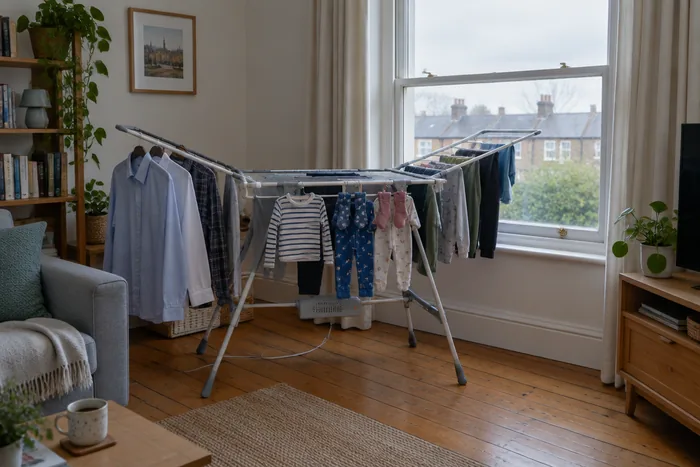
A single horizontal rack with fold-down wings, usually around 12 m of heated rail and a 15–16 kg maximum load, drawing about 230 W (Beldray quotes 230 W for its winged model). They are the cheapest type, but they take the most floor space for the drying length you get, and the wings have to be up to use the full length.
Tiered towers (2, 3 or 4 tiers)
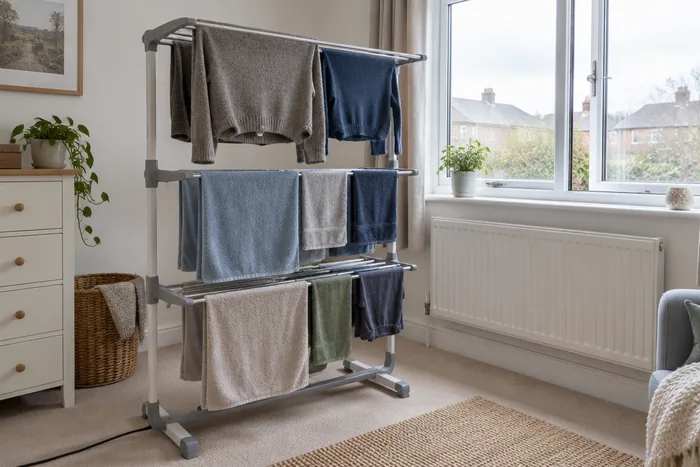
Heated bars on several levels, one above the other. A typical three-tier model offers about 20–21 m of rail at around 300 W, with maximum loads quoted from 15 kg to 30 kg depending on the brand. They fold flat for storage; Lakeland says its tiered airers fold to about 8 cm deep. Minky's four-tier model offers 23 m.
Airers with a cover
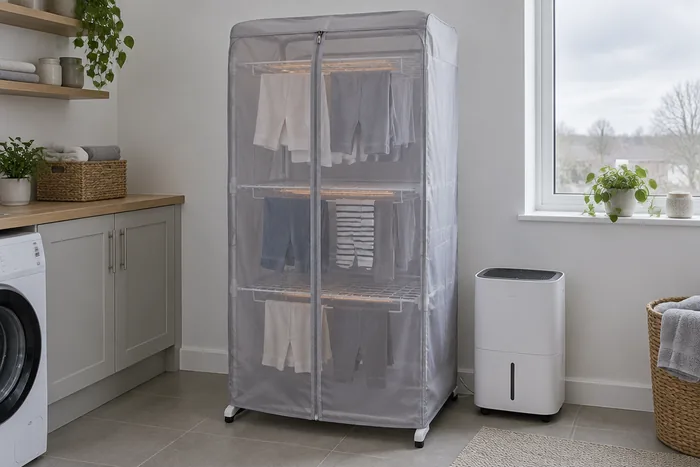
A zip-up cover goes over a winged or tiered airer and keeps the warm air around the clothes. Lakeland says its cover will "keep the heat in and speed up drying". Some models include the cover in the price, others sell it separately for roughly £12–£60, so compare like with like.
Drying pods and cabinets
A fabric pod or cabinet with a fan heater in the base: you hang clothes on hangers inside. They draw much more power (850–1,200 W) and dry faster, but hold less. Which? says they suit everyday items rather than sheets or duvets.
What each price band gets you
Prices below were checked on 23 October 2026 on the Lakeland, Minky, Beldray and B&Q websites. Argos, Dunelm, Currys and Robert Dyas could not be loaded by our checker that day, so check them too.
| Band | Example models and price seen | What you typically get |
|---|---|---|
| Under £50 | Dry:Soon Winged Heated Clothes Airer · £44.99 (Lakeland) Beldray Winged Electric Heated Airer EH1156 · £49.99 (Beldray)[1][2] | Winged rack, about 12 m of rail, 15 kg load, about 230 W. No cover. |
| £50–£100 | Minky Heated 12m Airer · £61.99 (Minky) Minky Winged sureDRI XL, cover included · £79.99 (Minky) Beldray 3 Tier Heated Airer EH3786 · £94.99 (Beldray)[3][2] | Bigger winged racks, some with a cover; entry-level three-tier towers (the Beldray offers 36 bars, 20 m, 300 W, 30 kg). |
| £100–£150 | Minky 3 Tier sureDRI 21m · £129.99 (Minky) Dry:Soon Mini 3-Tier · £129.99 (Lakeland) Black+Decker 3-Tier Heated Airer with Cover & Wheels · £138.99 (B&Q, sold by Benross)[3][1][4] | Three-tier towers of 13–21 m, about 300 W; some include a cover and wheels. |
| £150 and up | Dry:Soon 3-Tier · £159.99 (Lakeland) Minky 4 Tier sureDRI 23m, cover included · £159.99 (Minky) Dry:Soon Deluxe 3-Tier and Cover bundle · £194.98 (Lakeland)[1][3] | Larger towers with covers, longer warranties (three years on the Dry:Soon 3-Tier and Deluxe), timers. |
One oddity on the day we checked: Lakeland's Deluxe 3-Tier with its cover (£194.98) cost less than the Deluxe airer on its own (£199.99). Bundles and promotions change often, so compare the total price with a cover included.
What to check before you buy
Drying space and load
Look at metres of heated rail, not number of bars. Around 12 m suits one or two people; a family wash needs 20 m or more. Check the maximum load (15–30 kg on the models above) if you dry jeans, towels or bedding.
Wattage and running cost
Running cost is simple to work out: watts ÷ 1,000 × hours × your unit rate. At the Ofgem price cap rate of 26.32p per kWh for October to December 2026 [5]:
- a 230 W winged airer costs about 6p an hour;
- a 300 W three-tier airer about 8p an hour;
- a 1,200 W drying pod or cabinet about 32p an hour.
Which? measured an average of about 7p an hour for heated airers and found they take 4–5 hours to dry a small cotton load. Its yearly comparison puts three small loads a week at about £55 on a heated airer, against about £123 for a condenser tumble dryer, £135 for a vented one and £43 for a heat-pump dryer. For three large loads a week the airer cost rises to about £143, because big loads need several runs [6]. Lakeland and Minky both advertise "8p per hour" for their 300 W models; Lakeland's footnote says it assumed 26.11p per kWh.
Cover, timer and temperature
A cover helps the airer work faster. A timer stops it running all night by mistake. Published bar temperatures are around 45–55°C (Black+Decker quotes 45–55°C, Lakeland "up to 50°C" on its winged model), warm rather than hot, which is why drying takes hours.
Safety and where you use it
Follow your model's manual. Minky's three-tier page says to use the airer with its arms folded down only, and to unplug it and let it cool before cleaning. Which? says most brands advise against leaving an airer running unattended or overnight, and warns that overloading it with thick items, placing it near curtains or furniture, or using a cheap extension lead raises the risk of fire [7]. Lakeland, on the other hand, describes its airers as safe enough to be left on overnight, so check what your own model's instructions say.
Damp and ventilation
Drying laundry indoors puts a lot of water into the air. The government's damp and mould guidance lists drying laundry among everyday sources of moisture and suggests drying it outdoors when possible [8]. Which? advises against using a heated airer in a room with little air circulation; open a window a little, close the door to the rest of the house, or run a dehumidifier [6].
Warranty
On the pages we checked: Lakeland Dry:Soon 3-Tier and Deluxe three years; Minky tiered airers one year; Beldray one year, plus two more if you register within 30 days; Black+Decker (via B&Q) one year.
Who each type suits
- One or two people, small flat: a winged airer under £50, folded away when not in use.
- A family wash, no tumble dryer: a three-tier tower with 20 m or more and a cover.
- Small, quick loads (gym kit, school uniform): a drying pod, accepting the higher cost per hour.
- Big loads every day: Which?'s figures suggest a heat-pump tumble dryer may cost less to run [6].
- Damp-prone home: pair the airer with ventilation or a dehumidifier, or dry outdoors when you can.
Frequently asked questions
Is a heated airer cheaper to run than a tumble dryer?
For loads that fit on the airer in one go, yes: Which? puts three small loads a week at about £55 a year on a heated airer, against about £123–£135 for condenser and vented dryers. For large loads that need several runs, a heat-pump dryer (from about £43 a year) can be cheaper [6].
How much does a heated airer cost per hour?
About 6p for a 230 W model and 8p for a 300 W model at the Ofgem cap rate of 26.32p per kWh [5]. Which? found an average of about 7p an hour [6].
How long does a heated airer take to dry clothes?
Which? found 4–5 hours for a small cotton load [6]. Thick items, a full rack and a cold room all slow it down; a cover speeds it up.
Can I leave a heated airer on overnight?
It depends on the model. Which? says most brands advise against leaving one running unattended or overnight [7], while Lakeland says its airers are safe enough to leave on overnight. Read your manual and use a timer.
Do I need a cover, or can I put a sheet over it?
Brands sell covers made for their own airers to keep the heat in. Before you cover an airer with anything else, such as a sheet or duvet cover, check what your model's manual allows.
Will a heated airer cause damp or mould?
It can if the room is poorly ventilated, because the water from your clothes goes into the air. Open a window a little, close the door, or use a dehumidifier [6][8].
Is a heated airer better than drying on radiators?
Which? says drying clothes on your radiators could be the most expensive option of all, because the heating has to work harder [6]. It also adds the same moisture to the room.
Heated airer or drying pod?
Pods (850–1,200 W) dry faster but hold less and cost roughly four times as much per hour as a 300 W airer. They suit small everyday loads rather than bedding.
Sources (prices and specifications checked 23 October 2026)
We compared published specifications and prices; we did not run our own drying tests. Prices change often: check the seller's page before you buy.
- Lakeland: Dry:Soon Winged, Dry:Soon Mini 3-Tier, Dry:Soon 3-Tier, Dry:Soon Deluxe 3-Tier, Deluxe 3-Tier and Cover bundle, DrySoon Heated Drying Pod; Why buy a Dry:Soon heated airer (overnight use).
- Beldray: Winged Electric Heated Airer EH1156, 3 Tier Heated Airer EH3786, Quick-Dry Heated Airer System.
- Minky: Heated 12m Airer, Winged sureDRI XL, 3 Tier sureDRI 21m, 4 Tier sureDRI 23m.
- B&Q: Black+Decker 3-Tier Heated Clothes Airer with Cover & Wheels.
- Ofgem: Changes to energy price cap between 1 October and 31 December 2026 (26.32p per kWh, Direct Debit average).
- Which?: What's the best and cheapest way to dry clothes indoors? (uses 26.32p per kWh).
- Which?: Best heated clothes airers (safety advice).
- GOV.UK: Understanding and addressing the health risks of damp and mould in the home.